

Melanoma Detection
The key to survival is early detection.
Regular self examination looking for new or changing moles is crucial.
The 3 important indicators of melanoma are:- Asymmetry
- Irregular border
- Colour variation.
Melanoma Statistics
Being world leaders in melanoma incidence is probably not a statistic that we want. But Australia has the highest incidence of melanoma in the world!
It is also the most serious form of skin cancer and if not detected early, can be fatal.
Statistics at a glance
- Melanoma is the third most common form of cancer in Australian men and women (10% of all cancers)
- There are more than 12,500 new cases of melanoma diagnosed in Australia every year
- Melanoma makes up a small percentage of all skin cancers (only 2.3%) but is responsible for 75% of skin cancer deaths.
- The good news is that melanoma is often identifiable at an early stage where simple surgical treatment can result in complete cure.
The stories and outcomes from our Case Studies series to highlight the importance of early discovery and treatment of skin conditions for optimum outcomes.
What to look for:
Review by a dermatologist is recommended if any of your moles or pigmented spots exhibit:
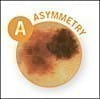 |
A = Asymmetry One half is unlike the other half. |
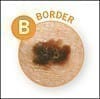 |
B = Border An irregular, scalloped or poorly defined border. |
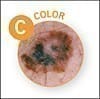 |
C = Colour Is varied from one area to another; has shades of tan, brown or black, or is sometimes white, red, or blue. |
 |
D = Diameter Melanomas are usually greater than 6mm (the size of a pencil eraser) when diagnosed, but they can be smaller. |
|
|
||
|
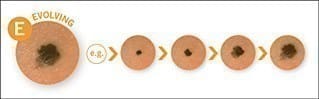
E = Evolving A mole or skin lesion that looks different from the rest or is changing in size, shape or color. |